On this page 8 sections
How teeth actually move
Teeth are not fixed in solid bone like posts in concrete. Each tooth sits in a socket and is held by a thin layer of fibres. When steady, gentle pressure is placed on a tooth over weeks and months, the bone on one side slowly reshapes and the bone on the other side fills in behind it. The tooth moves a tiny step at a time.
Braces and clear aligners both use this same process. The difference is the tool that applies the pressure: a wire and brackets fixed to your teeth, or a series of clear plastic trays you put in and take out.
Your three main options
Metal braces
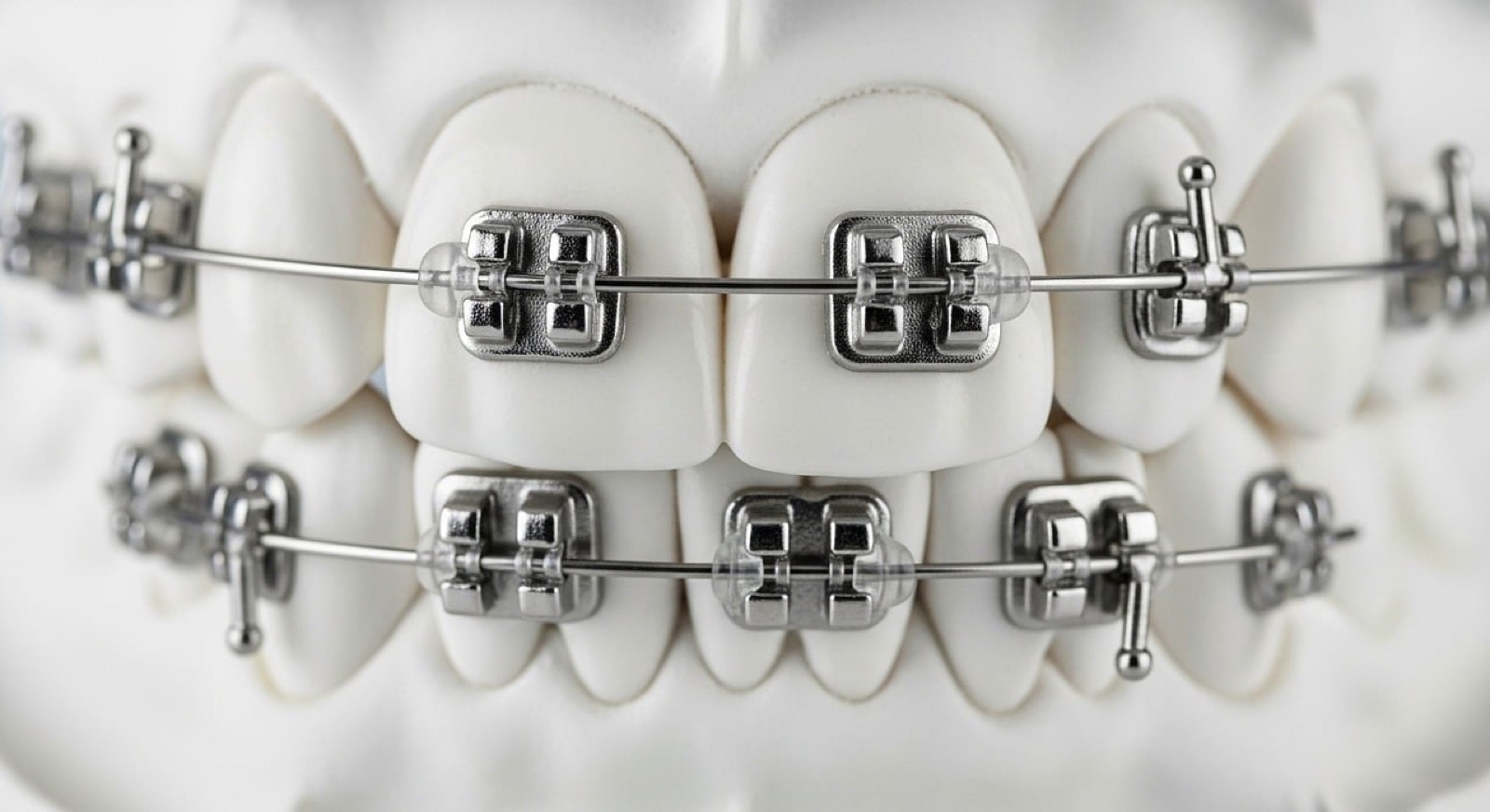
Small metal brackets are bonded to the front of each tooth and linked by a thin wire. The orthodontist adjusts or changes the wire at each visit to guide the teeth. Metal braces are strong and handle a wide range of cases, including more complex ones.
Ceramic braces
These work the same way as metal braces, but the brackets are tooth-coloured or clear, so they blend in more. Many adults and older teenagers choose them for that reason. The brackets need a little extra care, and the small elastic ties around them can pick up stains from strong tea, coffee or palm oil-heavy meals.
Clear aligners
Aligners are thin, clear, removable trays made to fit your teeth. You wear each set for about 1 to 2 weeks, then move to the next set, and each one nudges the teeth a little further. They need to be worn about 20 to 22 hours a day, so they only come out to eat, drink anything other than plain water, and clean your teeth.
Vista Dental Care offers clear aligners alongside metal and ceramic braces. Ask the team which options suit your case at your consultation.
Which cases suit which option
This is the most important question, and it is answered by an examination, not by preference alone.
- Fixed braces are often the stronger choice for complex movement: badly rotated teeth, large gaps, teeth that need to move up or down a lot, and many bite problems such as a deep bite or crossbite.
- Clear aligners may suit mild to moderate crowding or spacing, and some simpler bite corrections, when the patient will wear them faithfully.
The final say comes after an orthodontic assessment. That usually includes a close look at your teeth and bite, X-rays to see the roots and jaw, and sometimes photos or scans. Only then can anyone tell you which options would work for you.
Daily life with each option
Discipline
Aligners only work while they are in your mouth. If they spend long hours in a pocket or a drawer, the teeth do not move as planned. You remove them to eat, brush before putting them back, and keep the case with you. Braces cannot be forgotten, which is one reason some people, especially busy teenagers, do better with them.
Food and cleaning
With aligners you can eat what you normally eat, because the trays come out. With braces, hard and sticky foods can bend wires or knock brackets loose. Groundnuts, chin chin, hard roasted corn, chewing gum and sticky sweets are the usual troublemakers. Cutting food into small pieces helps.
Cleaning takes more effort with braces. Food collects around the brackets, so you brush slowly around each one and use small interdental brushes or floss threaders. With aligners, you brush and floss as usual and rinse the trays each time they come out.
Either way, clean teeth matter. Plaque left around brackets or trapped under aligners can mark the enamel and irritate the gums. Regular check-ups and cleaning during treatment help keep things healthy.

Look and comfort
Aligners are hard to notice in conversation. Ceramic braces are subtle up close. Metal braces are visible, though many young people are happy to choose coloured ties. All three cause some pressure soreness for a few days after an adjustment or a new set of trays. This usually settles, and soft foods help. Braces can also rub the cheeks at first; orthodontic wax eases that.
Visits, time and retainers
With braces, you usually come in roughly every 4 to 8 weeks for an adjustment. With aligners, visits are often spaced out, with check-ins to see that the teeth are tracking with the trays.
Treatment time is often 12 to 24 months, but it depends on your case and on how well the plan is followed. Nobody can give you an exact date before an assessment.
When the active treatment ends, you will need a retainer. Teeth tend to drift back towards where they started, especially in the first months. A retainer, fixed or removable, holds them in their new position. Wearing it as advised is part of the treatment, not an extra.
Quick comparison
| Metal braces | Ceramic braces | Clear aligners | |
|---|---|---|---|
| Look | Visible | Blends in | Hard to notice |
| Removable | No | No | Yes |
| Suits | Simple to complex cases | Simple to complex cases | Often mild to moderate cases |
| Daily effort | Careful brushing, food limits | Careful brushing, food limits | Wear 20 to 22 hours a day |
| Visits | About every 4 to 8 weeks | About every 4 to 8 weeks | Spaced check-ins |
| Price | On consultation | On consultation | On consultation |
Children and adults

Teeth can be moved at almost any age if the gums and bone are healthy. For children, an early check, often around age 7 to 10, lets the dentist spot bite problems while the jaw is still growing. Adults are welcome too; many start treatment in their twenties, thirties or later. Gum health is checked first, because healthy support around the teeth matters for safe movement.
What about cost?
The price depends on the type of appliance, how complex your case is and how long treatment is likely to take. At Vista Dental Care, the price is given on consultation, after your teeth have been assessed. Payment plans may be available for some treatments. Ask the team at your visit.
Talk through your options
Book an orthodontic assessment in Abuja and get a clear plan for your teeth.