Crowns, bridges and veneers in Abuja
Crowns and bridges protect and replace weakened or missing teeth, while veneers change the look of the front teeth. They help people whose teeth are broken, heavily filled, worn, gapped or discoloured.
Fee: price on consultation, after your dentist has examined you.

What are crowns, bridges and veneers?
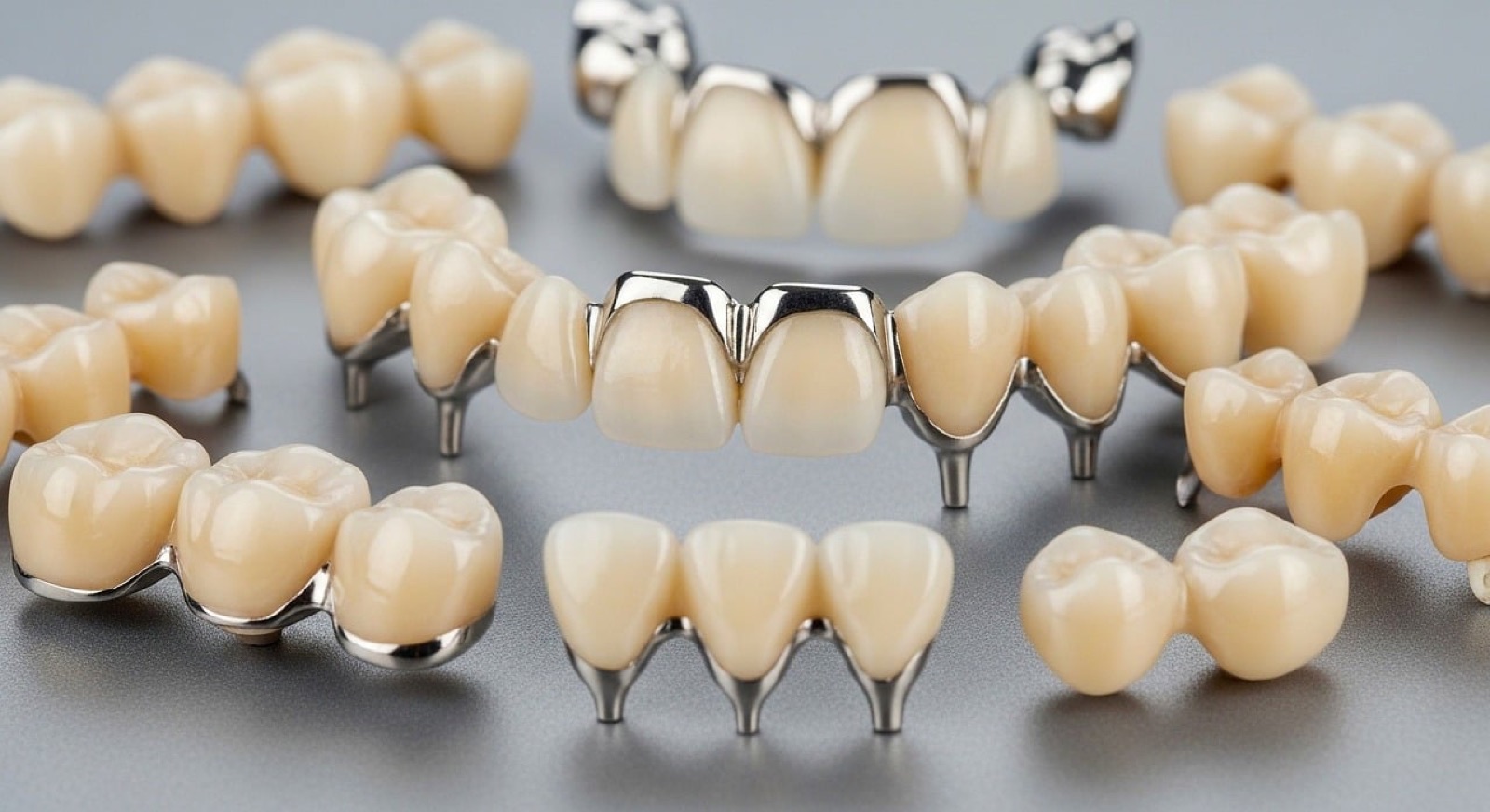
A crown (often called a cap) covers the whole visible part of a tooth. It holds a weak tooth together, protects it from breaking and gives it back a normal shape for chewing. At Vista we offer crowns in gold, silver alloy and tooth-coloured ceramic, and your dentist will explain which suits the position of the tooth and your needs.
A bridge replaces one or more missing teeth. The new tooth is held in place by crowns on the teeth either side of the gap, so it stays fixed in your mouth rather than being taken out each night.
A veneer is a thin shell bonded to the front of a tooth to change its colour, shape or size. Composite veneers are built up from tooth-coloured filling material and can sometimes be done in one visit. Porcelain veneers are made in the lab and usually need two or more visits. For porcelain, a thin layer of enamel is usually removed first, so it is a long-term decision worth talking through carefully.
Your dentist may advise a crown after a root canal treatment, when a tooth has a very large filling, or when a tooth is cracked and at risk of splitting.
We also make full and partial dentures for people missing several or all of their teeth, made in our own lab, and we can repair dentures too.
Good to know
- Crowns come in gold, silver alloy and tooth-coloured ceramic.
- A bridge is fixed in place and is not taken out to clean.
- Composite veneers can sometimes be done in a single visit.
- Porcelain veneers usually mean some enamel is removed, so the choice is long term.
- With good care, crowns and veneers can last many years. How long varies from person to person.
Made in our own lab, on site
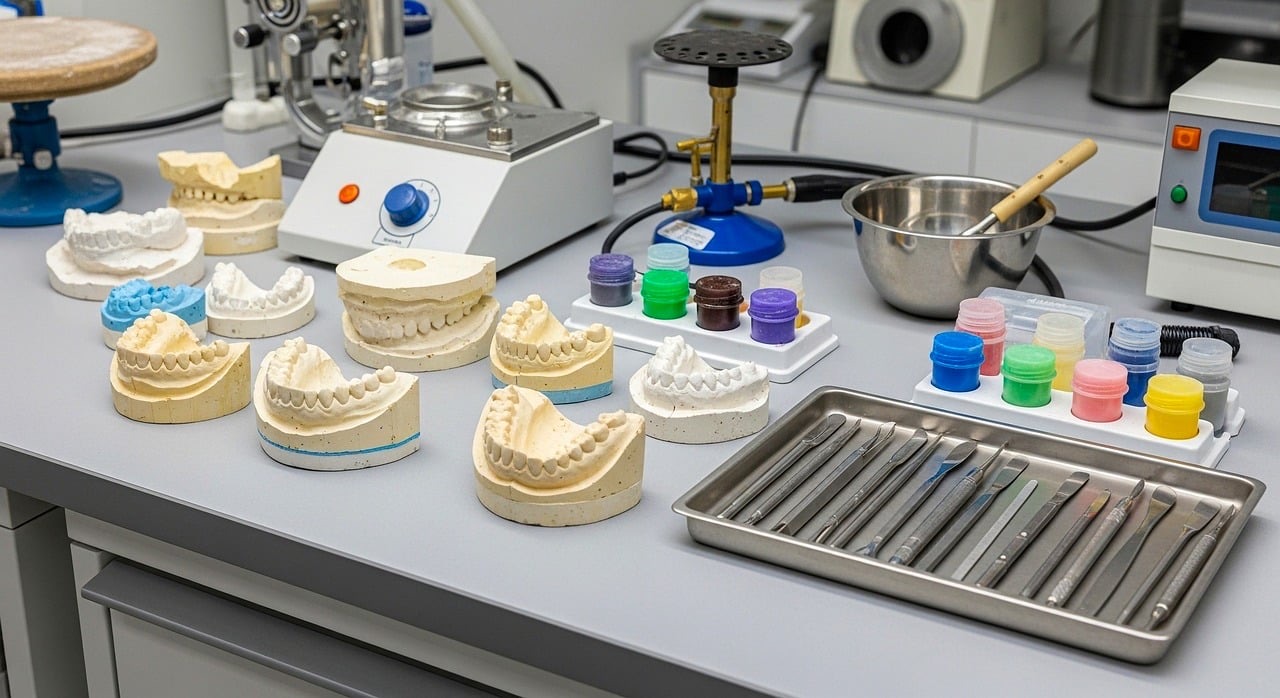
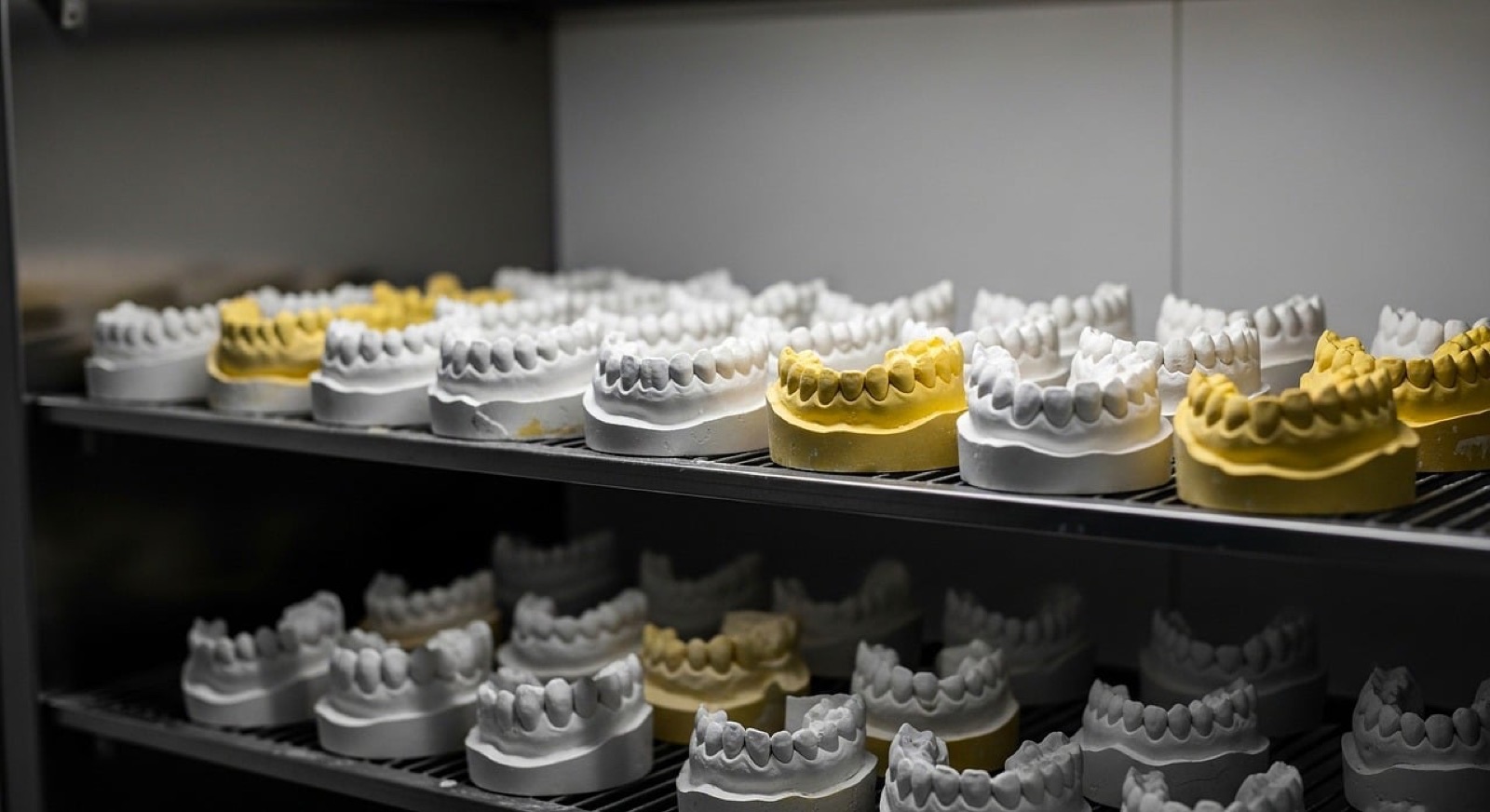
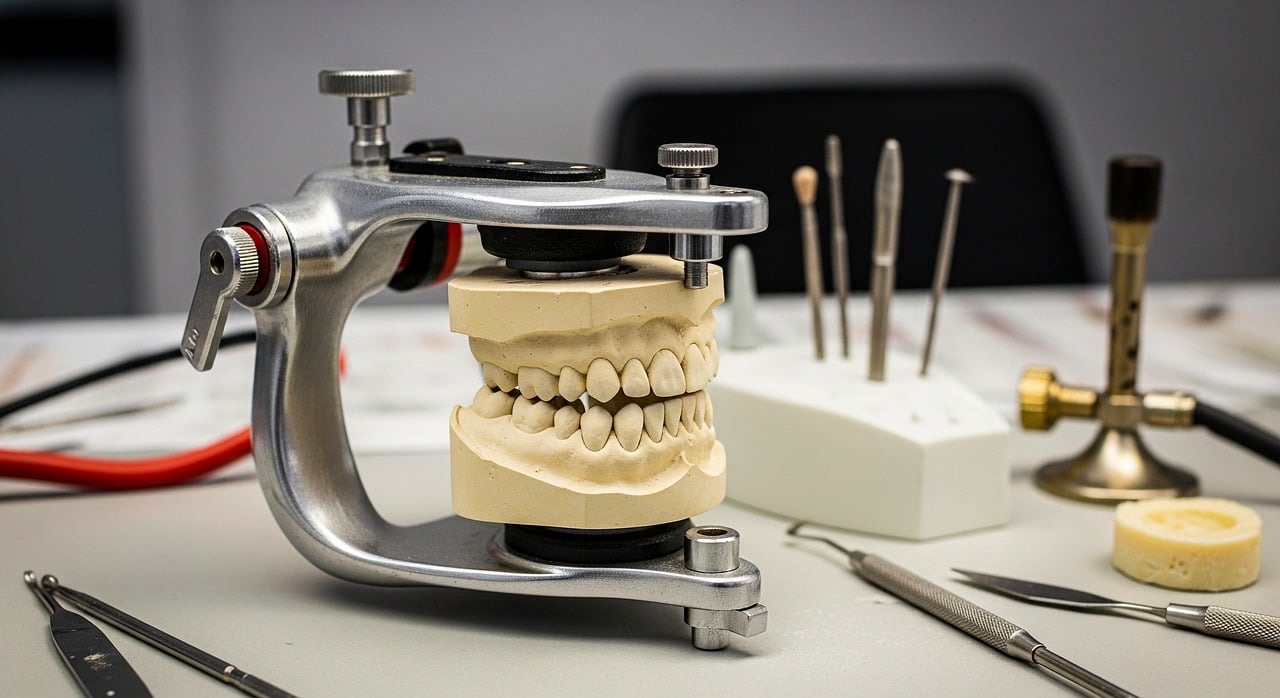
Most clinics send impressions away to an outside laboratory and wait for the work to come back. Vista has its own dental lab in the clinic, so the dentist and the dental technician work under one roof.
Why that matters to you:
- Your dentist and the technician can talk directly about the shade and shape of your crown or veneer, instead of passing notes back and forth.
- If a small adjustment is needed at your fitting, it can be made close by.
- The technician can see the colour of your natural teeth in good light when matching a shade, where your case needs it.
What our lab makes: crowns, bridges, porcelain veneers, full and partial dentures, denture repairs and retainers.
Materials we work with: ceramic (porcelain), metal-ceramic, gold and silver alloys, acrylic for dentures.
Who it's for
Your dentist will look at your teeth, gums and bite before suggesting any of these.
A weak or damaged tooth
If a tooth has had a root canal treatment, carries a very large filling or has cracked, a crown can hold it together and protect it when you chew.
One or more missing teeth
A bridge can fill a gap using the teeth on either side. Where several teeth are missing, a partial or full denture, or dental implants, may be options to discuss.
Front teeth you want to change
Veneers can cover chips, small gaps, worn edges or stains that do not respond to whitening. Your dentist will check that your teeth and gums are healthy first.
What to expect, step by step
These are the usual steps for a lab-made crown, bridge or porcelain veneer. Composite veneers are often simpler.
Assessment
Your dentist examines the tooth, may take an X-ray, and talks you through the options, materials and fee.
Preparation
Using local anaesthetic, the tooth is gently shaped so the crown or veneer fits. Any decay is removed first.
Impressions and a temporary
A mould or scan of your teeth is taken and the shade is chosen. A temporary crown or cover protects the tooth meanwhile.
Made in the lab, then fitted
Our technician makes your restoration on site. At your next visit it is tried in, adjusted for comfort and bite, then fixed in place.
How long it takes
A crown, bridge or porcelain veneer usually needs at least two visits, with the lab work in between. A composite veneer can sometimes be finished in one visit. The exact time depends on your case and how many teeth are involved.
Aftercare
- Brush twice a day with fluoride toothpaste and clean between teeth daily, including under a bridge.
- Avoid biting very hard things such as bones, ice or bottle tops.
- Be gentle with a temporary crown and avoid sticky foods until your final one is fitted.
- If you grind your teeth at night, ask about a night guard.
- Keep up regular check-ups so we can look after the edges of your crown or veneer.
Questions people ask
Still unsure? Send us a message and the front desk will reply during opening hours.
Ask on WhatsAppSee all questions →How long do crowns and veneers last?
With good care, many crowns and veneers last many years. How long yours lasts varies with the material, where the tooth is in your mouth, your bite and how well you look after it. Regular check-ups help us spot any problem early.
Which crown material should I choose?
Gold and silver alloy crowns are strong and are often used for back teeth. Tooth-coloured ceramic crowns blend in with your natural teeth, so many people prefer them for teeth that show when they smile. Your dentist will explain the trade-offs for your tooth.
Does getting a crown hurt?
The tooth is numbed with local anaesthetic before it is prepared, so most people feel pressure rather than pain. Some people notice mild sensitivity for a few days afterwards. Tell us if anything worries you and we will go at your pace.
Porcelain or composite veneers?
Composite veneers are built up directly on the tooth and can sometimes be done in one visit; they may need polishing or touching up over time. Porcelain veneers are made in the lab, usually take two or more visits and resist staining well. Porcelain usually means some enamel is removed, so it is a long-term choice. You can book a veneer consultation to talk it through.
Is a bridge or an implant better for a missing tooth?
Both can work well. A bridge uses the neighbouring teeth for support, while an implant replaces the root on its own. The right choice depends on the health of the nearby teeth, the bone and your preferences. Read more on our implants page.
Do you make dentures too?
Yes. We make full and partial dentures and repair existing ones, in our on-site lab.
Talk to us about your teeth
Book a consultation and your dentist will explain whether a crown, bridge or veneer suits you, and what it will cost.
Related: Dental implants · Teeth whitening · Dental implants in Abuja: what to expect